SPRING Evaporative Humidifier
Description
Say goodbye to that damp, foggy mist cloud hanging over your nightstand. SPRING brings balanced, comfortable humidity into your space using smart evaporative technology — so the air feels right without ever looking wet. Just set your ideal humidity, pick your mode, and let SPRING quietly handle the rest.
- Mist-free comfort — Enjoy all the benefits of humidified air with none of the visible fog. SPRING's evaporative technology keeps your room feeling fresh, not damp.
- A mode for every moment — Ramp up moisture on dry days, dial it down for quiet focus, or let SPRING gently manage the room while your little one (or you) sleeps.
- It knows before you do — Built-in humidity sensing keeps track of your room's air in real time, so you're never guessing whether it's too dry or just right.
- Dial in your perfect air — Fine-tune humidity anywhere from 40–80% RH and let SPRING lock it in — no constant fiddling required.
- Fill it, forget it — A generous 4L tank means fewer refills and hours of worry-free comfort, with an easy pop-out design that makes topping up simple.
How Spring works, in eight short rooms.
Each room has one thing to try. Three minutes, start to finish.
Your heat is quietly turning your home into a desert.
Cold air can only hold a little water. When your heater warms it, that same little bit of water gets stretched across much warmer air, and the humidity in the room collapses. Nothing leaked. The water was never there.
Pick your state to see a typical winter night where you live, then make it yours with the sliders.
Outdoor air warmed to your thermostat with nothing added. Cooking, showers and people add a little back. Drafty homes lose more.
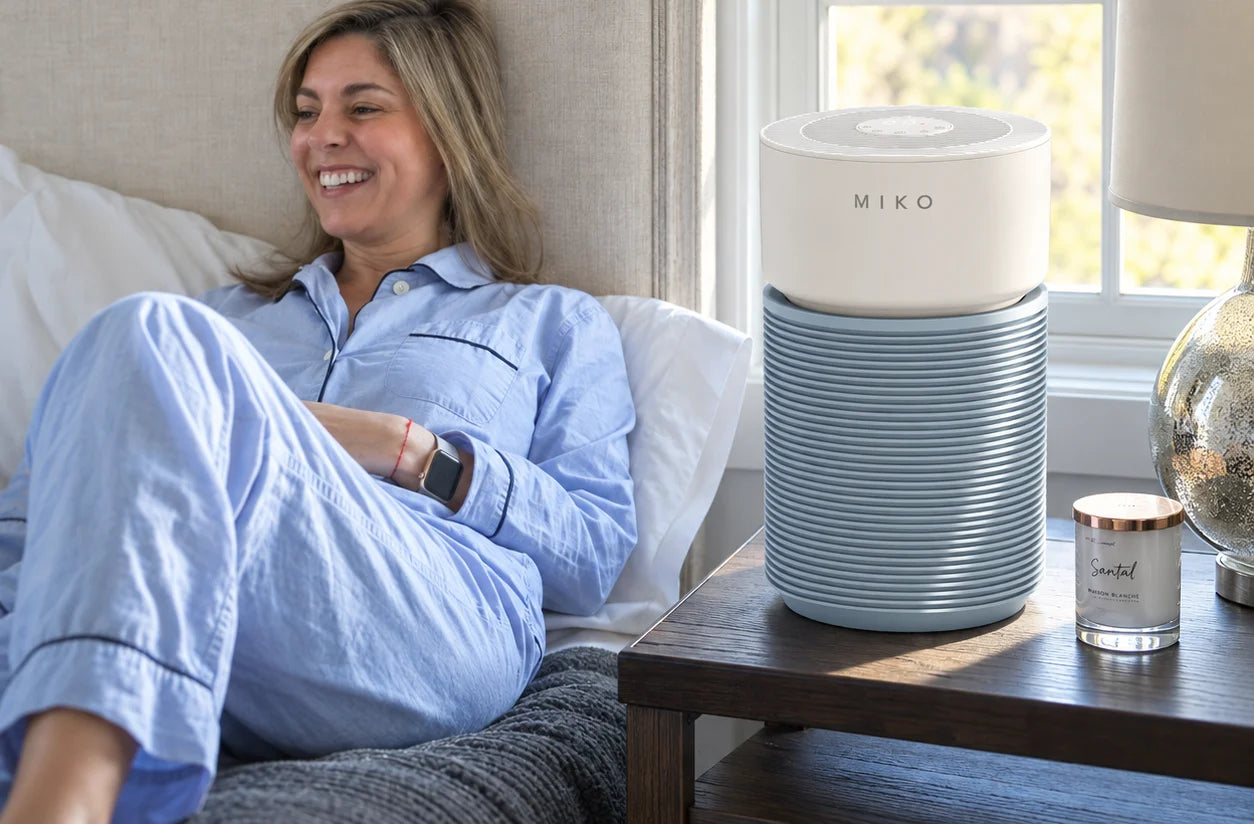
No scratchy throat. No reaching for lip balm. You just wake up feeling normal.
Every humidifier does one of three things to water. What it leaves in your room is the difference.


Same shelf. Same light. Drag the line.
On one side, Spring: nothing you can see in the air, nothing on the wood. On the other, a typical ultrasonic mist humidifier, where tap-water minerals can settle as white dust and droplets around it.
The difference isn't the design. It's what each one does to water.
Illustrative images.
Ultrasonic cool mist
| Ultrasonic mist | Warm mist | Spring · evaporative | |
|---|---|---|---|
| You can see it working | Yes, a mist plume | Yes, steam | No. The display shows the number |
| White dust from tap water | Can happen | No | No |
| Hot water inside | No | Yes | No |
| Damp surfaces nearby | Can happen | Can happen | No |
| Eases off as the room fills | No | No | Yes, on its own |
We make mist humidifiers too. Breeze and Myst are great when you want to see it and feel it fast. Spring is for the rooms where you never want to think about it.
Air goes in dry. It leaves carrying water you can't see.

It's the same thing that dries a towel on a line. Spring just does it on purpose, in something you'd happily keep beside the bed.
Where the minerals go. Water evaporates. The calcium and magnesium in your tap water can't, so they stay in the filter instead of drifting onto your furniture.
The hardest-working part is the one you'll never look at.
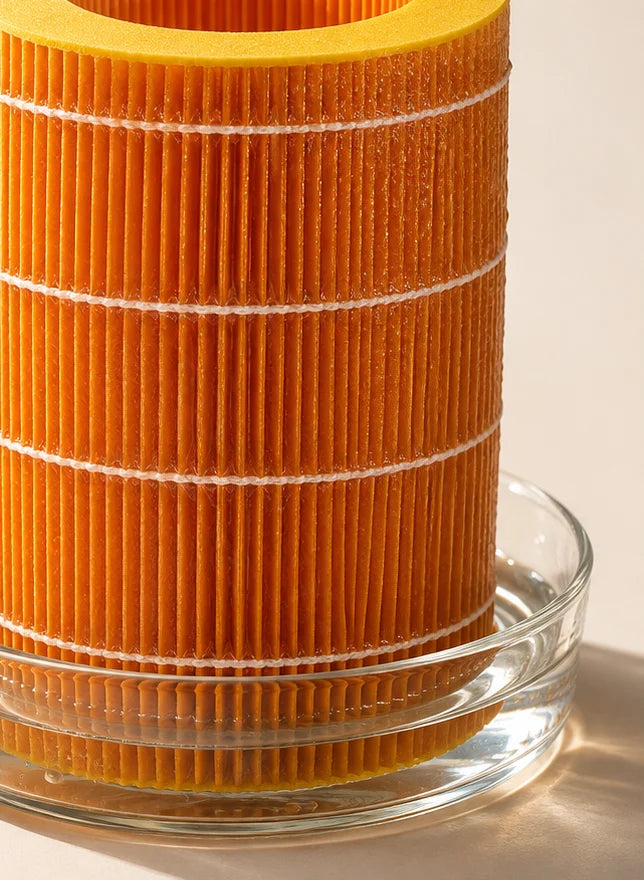
A flat fabric pad only gets wet where it touches the water and dries out above it. Spring's filter is pleated top to bottom, so it wicks water up its full height and gives the air far more wet surface to pass through.
Pick a number. Spring holds it, and shows you it's working.
Illustration. Real timing depends on room size, temperature and drafts. Very high targets in large rooms take longer.
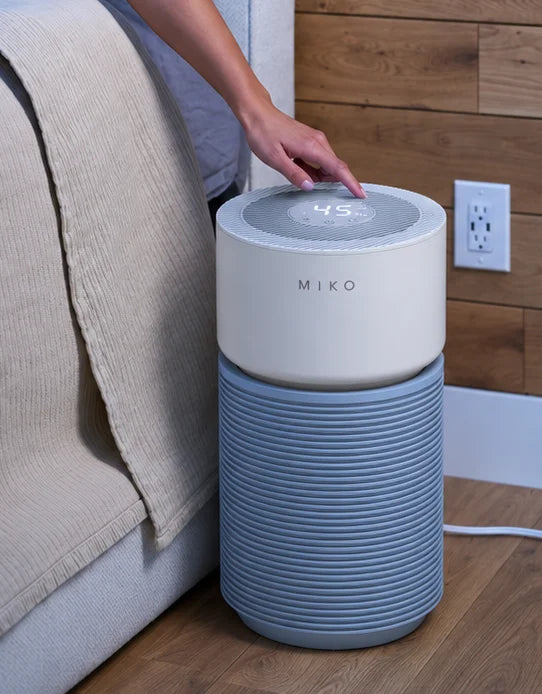
With no mist, you can't watch Spring work. So it tells you. The display shows your room's live humidity, and the built-in sensor runs the fan only when the room drops below your number. As the air gets wetter, evaporation slows on its own, which makes it much harder to overdo than a mist machine.
Five ways to run it, from the first coffee to 3 a.m.
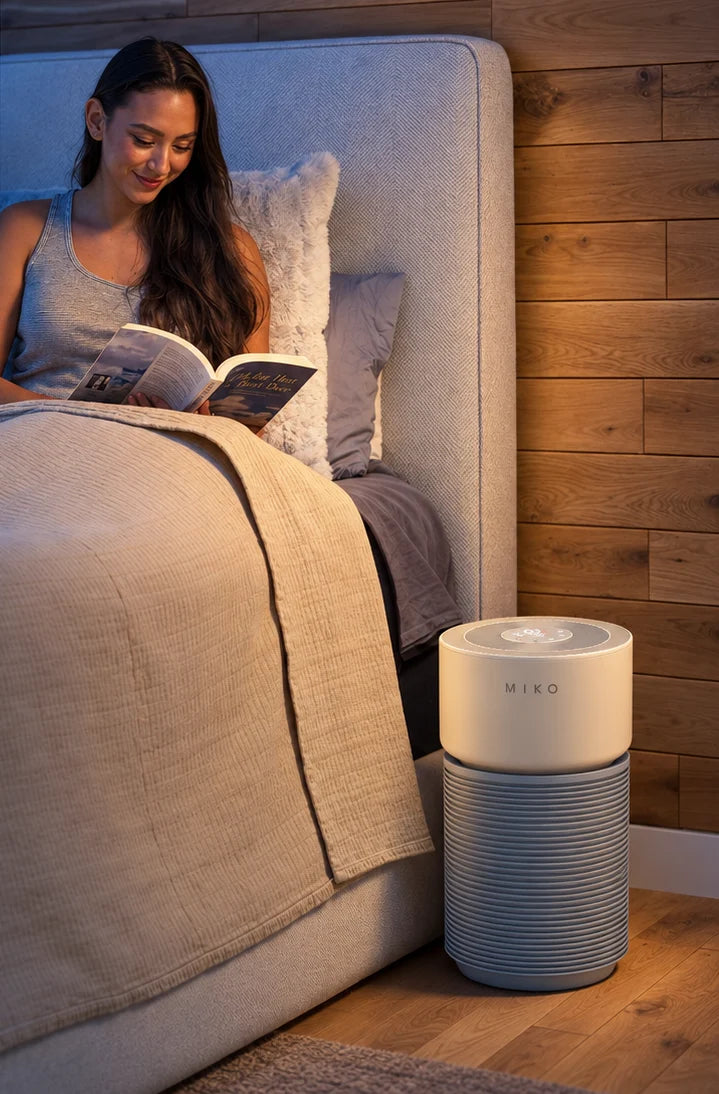
Five minutes a week. Nothing hidden, nothing to guess at.
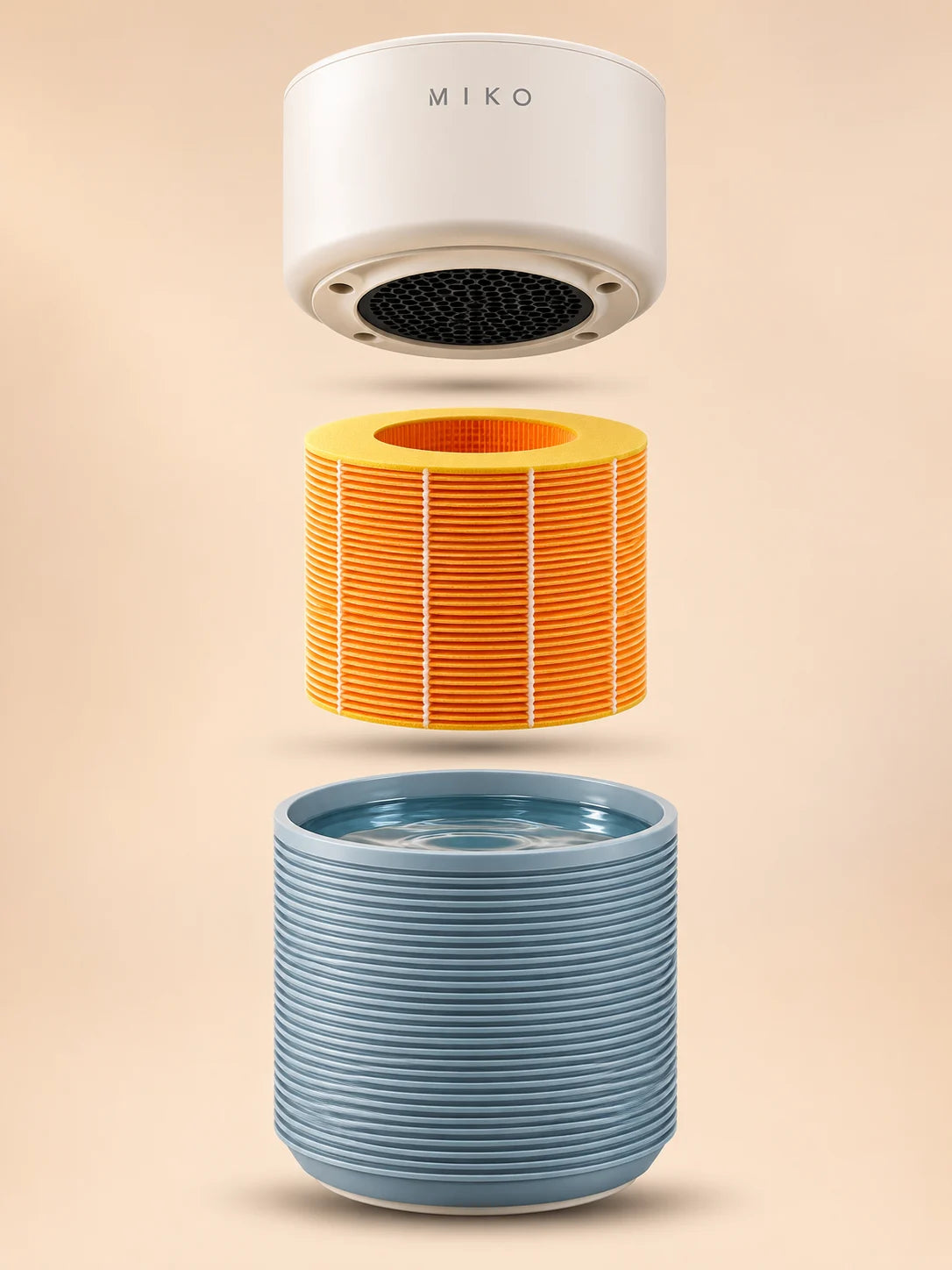
Everything that touches water is in plain sight under one lift-off top. No hidden chambers, no tubes, no mist plate.
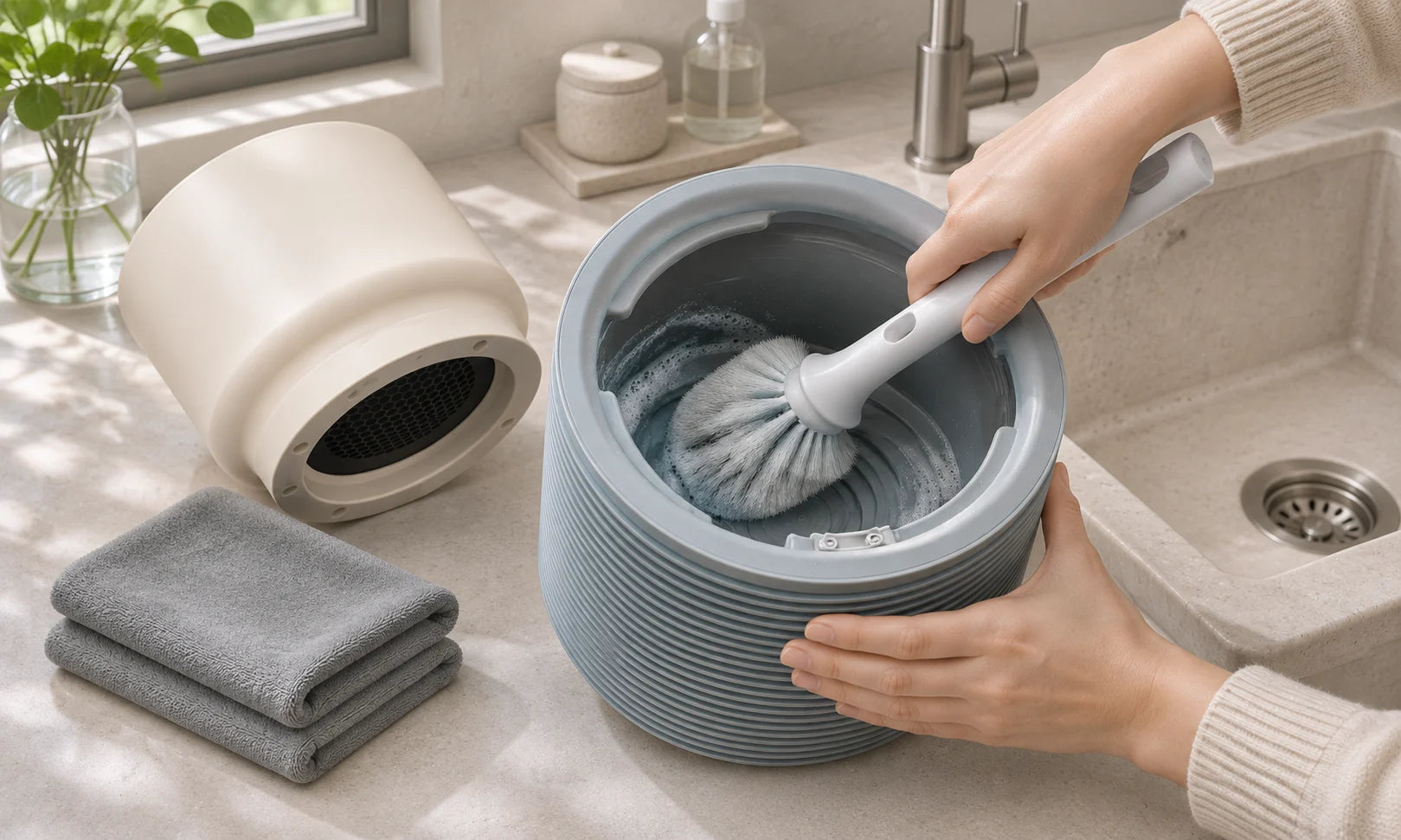
A dishwasher rinses. A brush actually cleans.
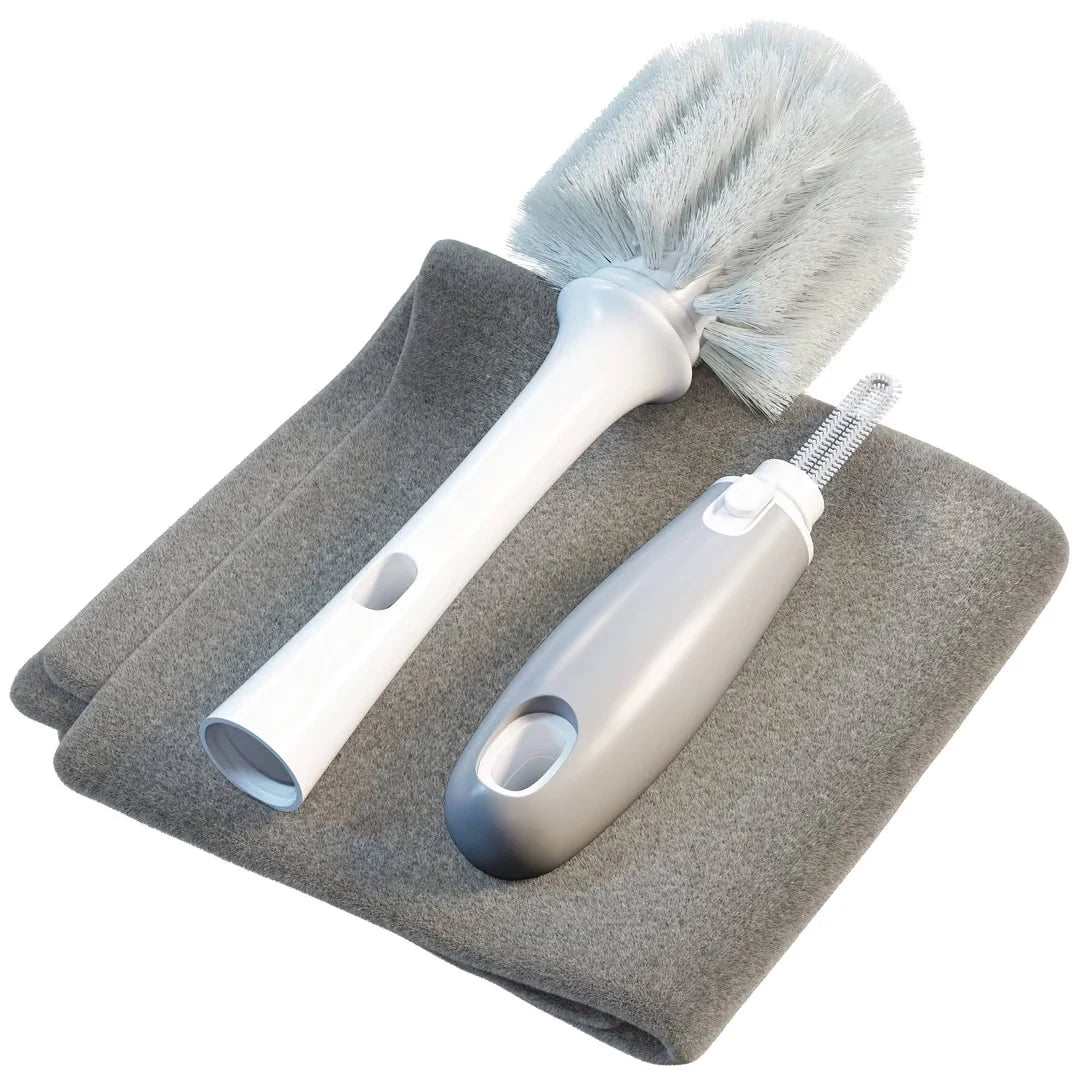
The Miko Cleaning Kit
Designed to make cleaning a breeze and reach every nook and cranny of a Miko humidifier, so the weekly clean really is five minutes.
- 2-in-1 brush: a wide round head for the tank, a slim detail brush for the tight corners
- Large and small wiping cloths to dry everything off
- BPA-free, with a non-slip handle
8 watts, about what one LED bulb draws. At the U.S. average of 18.83¢ per kWh (EIA, April 2026).
Spring isn't for everyone. Two questions and you'll know.
How do you feel about seeing mist?
How big is the room?
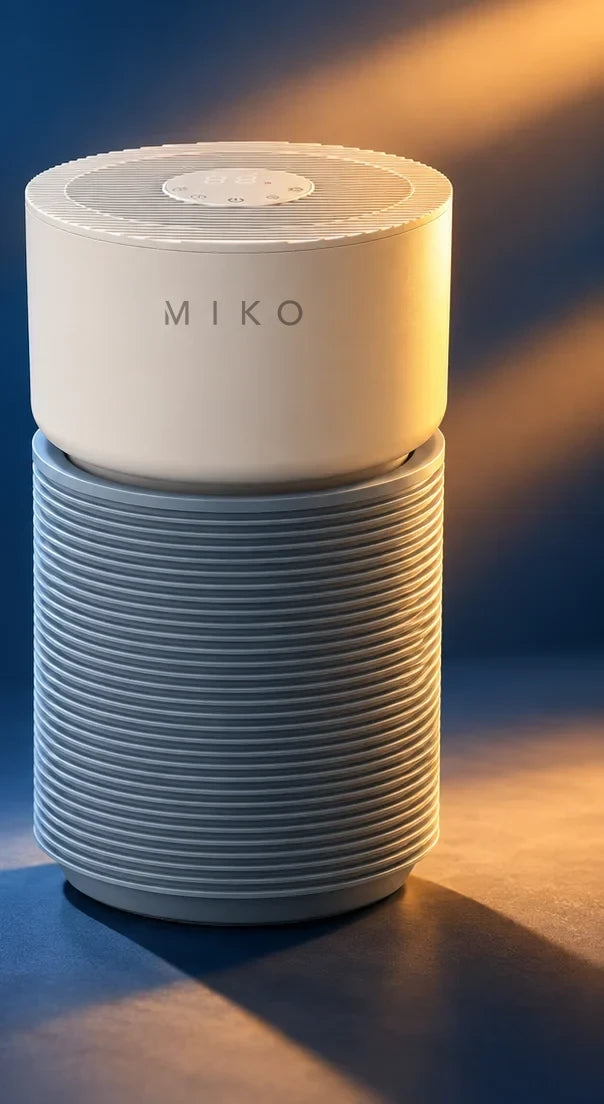
Humidifier reviews tell the same four stories.
White dust on the TV stand. A damp ring on the nightstand. A tank that grew something by February. And a box nobody can tell is even working.
Spring answers all four: water leaves as vapor, the tank and filter sit in plain sight, and the display tells you exactly what your air is doing.
Spring, in numbers.
- Type
- Evaporative, mist-free
- Room size
- Up to 800 sq ft
- Tank
- 4 L, about 1 gallon
- Output
- Up to 400 ml an hour
- Humidity
- Set 40–80%, live reading
- Modes
- Comfort, Ultra, Quiet, Sleep, Baby
- Timer
- 1–8 hours
- Noise
- 48 dB or less
- Power
- 8 W, 12 V adapter
- Size
- 8.8 × 8.8 × 15 in
- Weight
- 5.3 lb
- Cord
- 5.9 ft
- Controls
- Top touch panel and remote
- Filter
- MAHF-04, every 2–3 months
- Cleaning
- Hand wash
Before you decide.
Why don't I see any mist?
Because there isn't any. Spring evaporates water into the air instead of spraying it, so the moisture is invisible from the start. Watch the humidity number on the top panel climb. That's your proof.
Can I really use tap water?
Yes. Minerals can't evaporate, so they stay in the filter instead of landing on your furniture as white dust. Very hard water just means you'll swap the filter toward the 2-month end.
How often do I refill it?
The 4-liter tank runs up to about 10 hours at full power. Because the sensor only runs the fan when the room needs it, most people fill it once a day.
How loud is it?
48 dB or less at full power, a soft hum. Quiet and Sleep modes run the fan lower. It isn't silent, and we won't pretend it is.
Is it a good fit for a nursery?
It was built with one in mind: no hot water, no visible mist, a Baby mode that adjusts to the room's real-time humidity, a low-voltage 12 V adapter, and it pauses itself when the water runs low. As with any appliance, keep it and its cord out of a child's reach.
Can it go in the dishwasher?
No, and that's on purpose. A soft brush and a wipe do a better job on the film that forms in standing water than a dishwasher spray does, and you can see that every surface is clean. The Miko Cleaning Kit makes the weekly clean a five-minute job.
What about mold?
Anything that holds water needs cleaning, and we won't tell you otherwise. Spring makes it simple: everything is in plain sight under the top. Rinse the tank at each refill, brush and wipe it weekly, swap the filter every 2–3 months, and use Air Dry before you put it away.
What size room is it for?
Up to 800 sq ft. It does its best work in bedrooms, nurseries and offices. In a big open space it keeps up well when the air is moderately dry; on the driest days, use Ultra-Moisturizing mode.
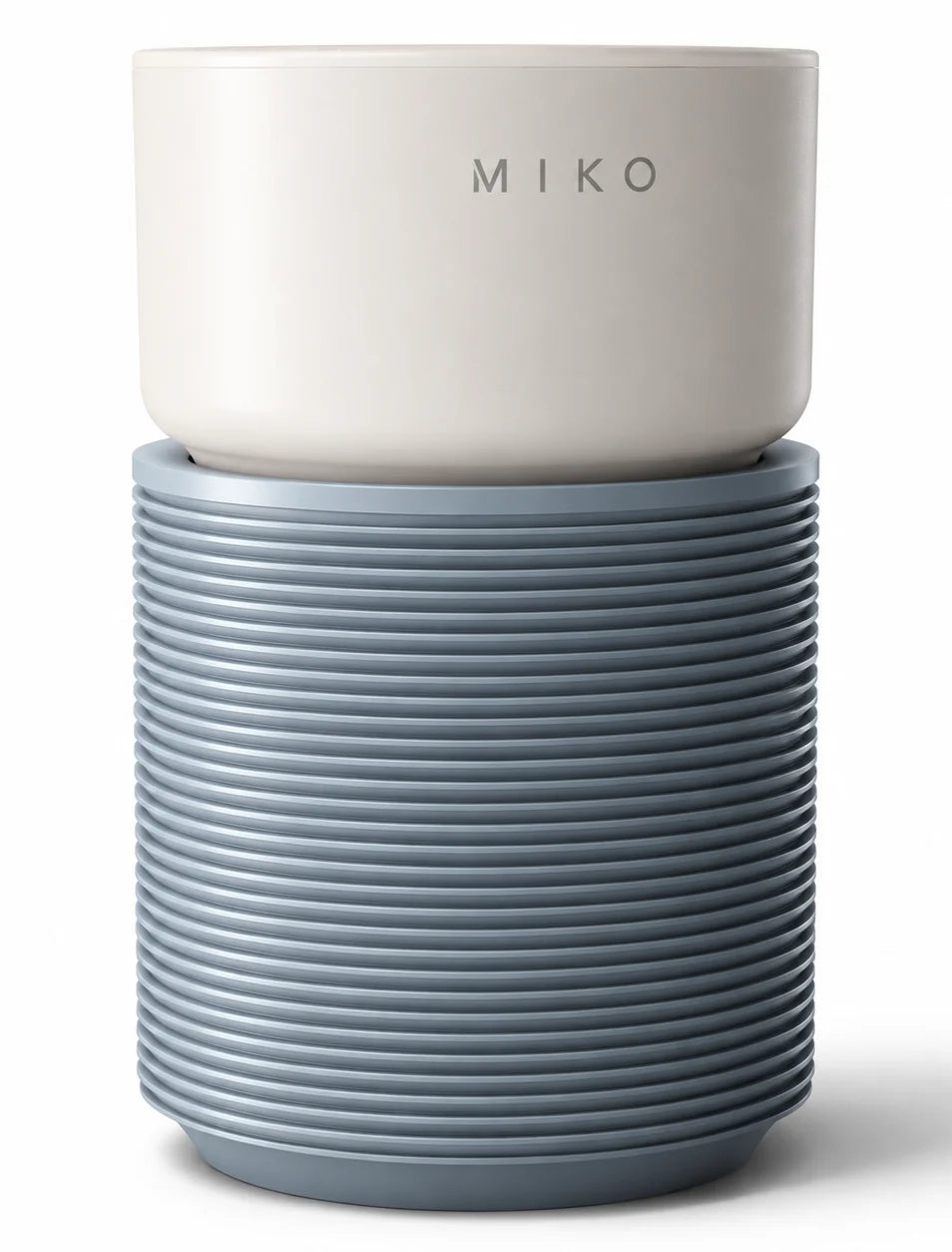
Spring air, all winter.
Set it once tonight. Notice it tomorrow morning.
- Spring evaporative humidifierFilter installed
- Remote controlIncluded
- Power adapter, 5.9 ft cordIncluded
Sources: Mayo Clinic, "Humidifiers: Ease skin, breathing symptoms" (30–50% indoor humidity; dry-air symptoms). Consumer Reports, "Why the right home humidity matters" (indoor air can drop to 10% in winter). U.S. EPA, "Use and Care of Home Humidifiers." Noti JD et al., PLOS ONE 8(2): e57485, 2013. State winter temperatures: NOAA statewide averages, December–February, 1971–2000, via Current Results. State winter humidity: average of morning and afternoon readings at a representative city, December–February, via Current Results. Indoor humidity uses the Magnus formula. Running cost: 8 W at 18.83¢/kWh (EIA, April 2026). Spring is not a medical device.